Gozo
Man on FireGozo is the smaller island between Malta and the mainland, but in the novel it becomes more than a destination: it is the place where Creasy prepares for his next undertaking and, for a time, builds a life with Nadia Schembri. Its steep green hills, cultivated terraces, close-knit social habits, and clear surrounding water shape a setting that offers both demanding physical terrain and a community markedly different from the world he is preparing to re-enter.
Island and Approach
Creasy reaches Malta aboard an Italian ferry delayed twelve hours by a strike. Because of the delay, it arrives at Grand Harbour in the early morning, sparing him an overnight stay on Malta and letting him press on toward Gozo, where he is eager to begin his program. The two islands are connected by the Melitaland, a squat, blunt-looking vessel built to carry cars, trucks, and passengers across the two-mile stretch. The ferry’s practical purpose, rather than any elegance of design, defines this first approach to Gozo as a working passage between islands.
The crossing passes Comino, where an old watchtower stands above the cliffs. Below it, the Blue Lagoon’s vivid blue water lies over a sandy bottom. Creasy remembers swimming there eight years earlier with Guido Arrellio and Julia. The water remains clear, and the shoreline uncluttered; the tides and currents have minimized pollution. Ahead, Gozo rises steeper and greener than Malta. Villages crown its hills, while intensively cultivated fields descend in terraces almost to the water’s edge. The island is presented through a meeting of human use and coastal landscape: agriculture reaches the shore, but the visible water and beaches remain notably clean.
Community and Local Character
Gozo stands out to Creasy for its lack of social class. In his recollection, the poorest fisherman knows himself to be as good as the richest landowner. That sense of equality is also a rebuke to anyone who considers himself superior: such a person, Creasy thinks, should avoid the island. His memory of Gozitans is not an abstract social judgment alone. He recalls people who are noisy and cheerful, and who become friendly once they know someone.
The harbor at Mġarr makes that public character immediately tangible. As the ferry turns into the small harbor, passengers bustle forward, each eager to be among the first ashore. The scene is lively and crowded, but it also marks a threshold: Creasy is leaving the transit of Malta behind and entering a place he already remembers with affection. The island’s welcome is not presented as instant intimacy. Friendliness follows familiarity, matching the importance the novel gives to being received into an established local community rather than simply passing through it.
Bars, Roads, and the Farmhouse
After landing, Creasy walks uphill to Gleneagles, a bar whose grand name contrasts with its old, oblong building and narrow balcony facing the water. Inside, the high ceiling and cool, barn-like room are accompanied by paintings of local landscapes and locals leaning at the bar. Guido Arrellio has directed him there to phone Julia’s parents, who are to collect him. The bar thus serves as a practical meeting point, but its view, artwork, and regular customers also place Creasy within the island’s everyday social surroundings.
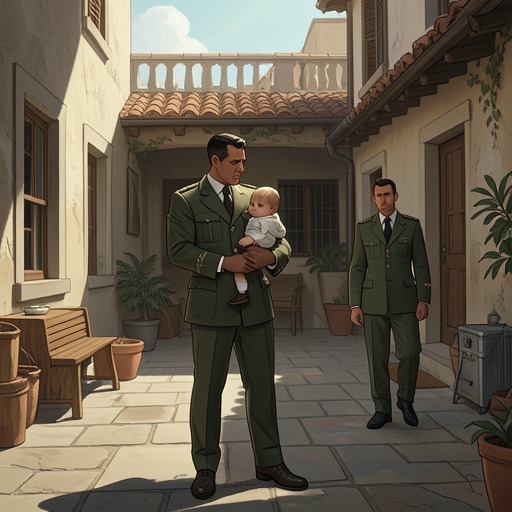
The farmhouse lies beyond the steep ascent through Qala and the descent before the Nadur road. Built in the old style around an inner courtyard, it is a sprawling stone structure; one newer-looking wing is reached by an outside staircase. Julia’s mother comes out from the kitchen to greet Creasy, embraces him, and kisses his cheek. The warmth of that welcome is rooted in a domestic space rather than a formal lodging: the courtyard farmhouse and its kitchen establish the family as the people receiving him into their home.
A Place of Preparation and Attachment
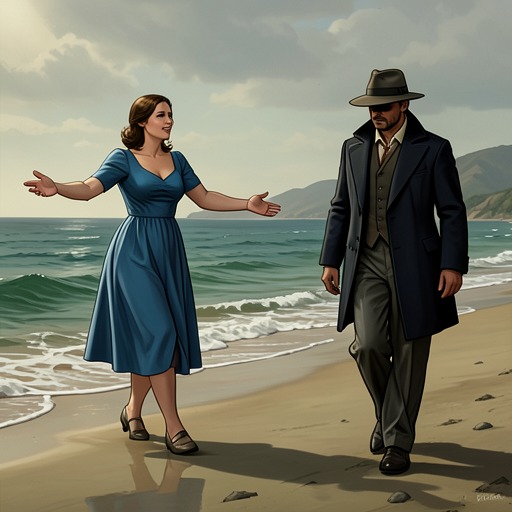
Gozo’s landscape becomes part of Creasy’s recovery and preparation. On a later swim, he dives from a flat rock fifteen minutes before the turn of the tide. A slight breeze blows from the west, but the current is slack, allowing him to swim steadily around the small bay toward the hotel jetty. Nadia Schembri watches from an upstairs bedroom window through her father’s binoculars. She has already arranged for Joey to wait at Gleneagles each morning for three days, anticipating that Creasy will attempt the swim again even though he has not told her he intends to do so. When he reaches the hotel, she sends a glass of beer and a plastic bag through a receptionist at the Comino Hotel. Creasy sees the farmhouse across the channel, catches the sun flashing from the binoculars, and raises his glass toward Nadia Schembri in a silent toast.
The island is therefore both a training ground and a lived-in home. As Creasy grows fitter, he thinks ahead to leaving: the preparation has been long and hard, and he expects that in two weeks his body will be ready to match his plans. But departure carries an opposing force. He recognizes that leaving Gozo and Nadia Schembri will be final, and admits to himself that he loves her. The farmhouse, coast road, bay, and everyday crossings between them acquire their importance through this tension. Gozo gives Creasy the conditions and community in which to recover, but the attachment he forms there makes readiness to leave emotionally different from readiness for the work ahead.